Rewrite Here’s a rewritten version of the article with improved clarity and flow:
—
📈 Ripple IPO Could Be Game-Changer for XRP — But Plans Remain on Hold
According to crypto community insights from All Things XRP, a potential Initial Public Offering (IPO) from Ripple could have a transformative impact on its native token, XRP. While speculation is mounting, no official plans for an IPO have been confirmed.
Why a Ripple IPO Could Matter
Should Ripple move forward with an IPO, it would introduce fresh liquidity for early investors and usher in heightened transparency, as public companies must comply with rigorous regulatory and financial disclosure requirements. This, in turn, could reshape XRP’s standing in the financial world.
All Things XRP recently summed up the potential shift via social media, stating bluntly: “IF RIPPLE IPOs, HERE’S WHAT COULD HAPPEN TO XRP… XRP doesn’t just go up… it graduates.”
Wall Street’s appetite for clarity would be satisfied by Ripple opening its books to public scrutiny. This move could legitimize XRP in the eyes of institutional investors, changing it from a speculative digital asset to a more regulated, financial-grade investment.
Market analysts believe an IPO could fuel investor momentum. Some projections suggest XRP could jump to $8, with optimistic forecasts predicting it could reach $10 by 2030. These expectations are based not only on a potential IPO but also on regulatory clarity and adoption of Ripple’s upcoming RLUSD stablecoin.
An IPO would also provide Ripple with a significant capital injection—funds that could bolster the XRP Ledger, fund blockchain innovation, and enable strategic acquisitions. A recent example of Ripple’s expansion strategy was its $1.25 billion acquisition of Hidden Road, a leading institutional brokerage platform.
Ripple Currently Holding Off on IPO
Despite the buzz, Ripple CEO Brad Garlinghouse has poured cold water on immediate IPO discussions. In a previous statement, he clarified that Ripple is currently focused on building through acquisitions rather than raising funds via public markets. “We’re not looking to go public right now,” said Garlinghouse. “We’re more interested in growing through mergers and acquisitions.”
Still, the XRP ecosystem continues to thrive. Teucrium made headlines with the launch of the first leveraged XRP ETF in the U.S., recording over $5 million in volume on its first trading day. Additionally, heavyweight asset managers including Bitwise, 21Shares, Grayscale, and Franklin Templeton have filed for XRP ETFs—18 proposals in total now await SEC approval.
Market Performance
XRP recently broke above the $2 mark, hitting a high of $2.02—a 3% weekly gain. However, the market saw a minor correction of 1.10% in the last 24 hours. Trading volume also declined 20.81%, now sitting at about $2.36 billion.
📌 Bottom Line: While Ripple’s IPO remains speculative for now, investor interest—and XRP’s momentum—continue to rise. If and when Ripple goes public, it may mark a new financial chapter not just for the company, but for the entire cryptocurrency space.
—End of Article—
Market implications of a Ripple IPO
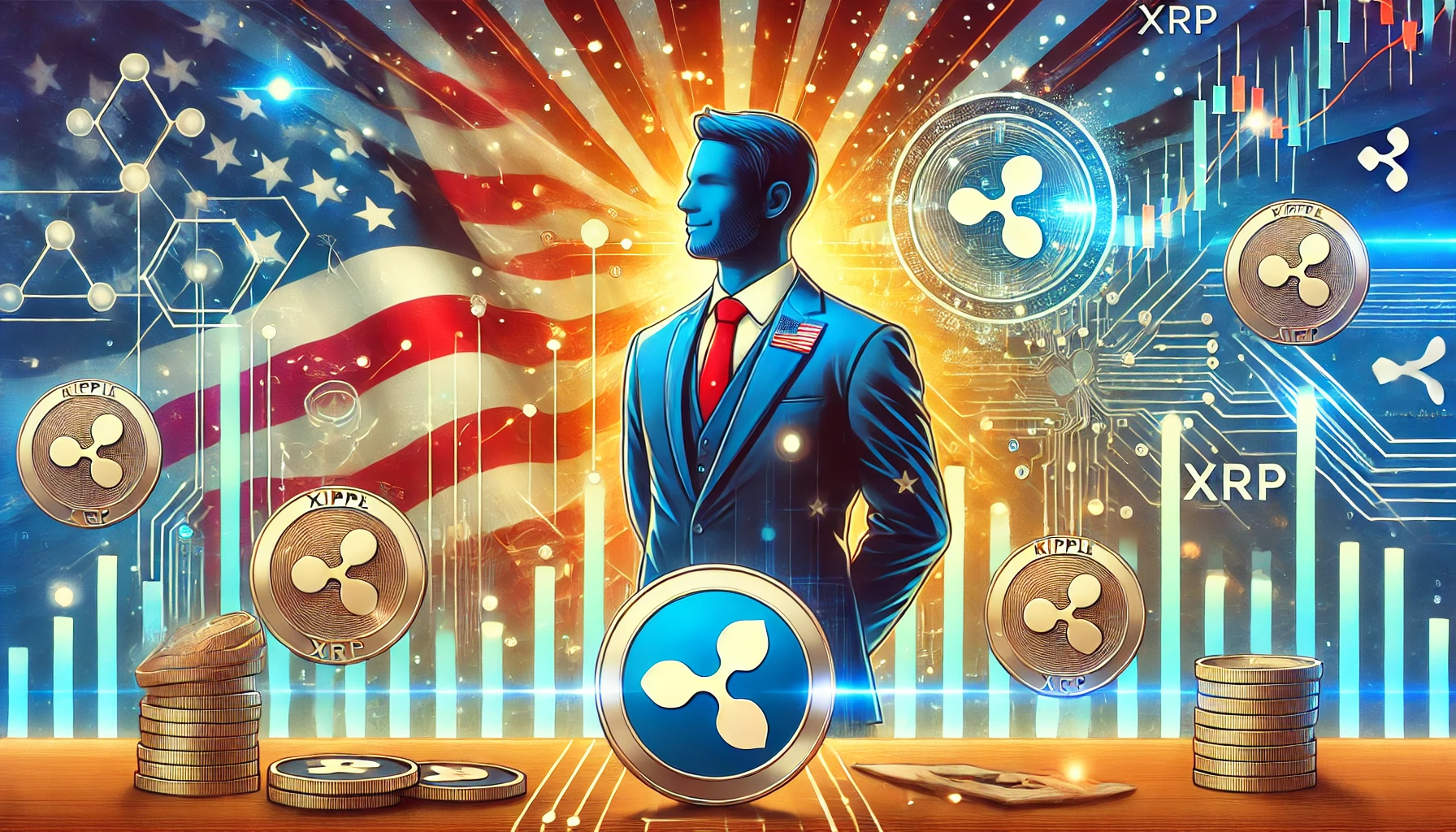
When a crypto-native company like Ripple flirts with the idea of going public, the financial world takes notice—and for good reason. An IPO would not only mark a pivotal milestone for Ripple itself, but it would also ripple (pun intended) across the entire XRP ecosystem, influencing everything from liquidity flows to cross-border payment adoption. The market implications are vast, nuanced, and potentially groundbreaking.
First and foremost, a Ripple IPO would inject significant capital into the company’s war chest, enabling it to ramp up development of the XRP Ledger (XRPL), scale its On-Demand Liquidity (ODL) services, and potentially launch new financial products targeting institutional clients. This capital infusion could also be used for strategic acquisitions, as seen in Ripple’s recent .25 billion acquisition of Hidden Road, a move that hints at its appetite for consolidating crypto-financial infrastructure.
But the impact goes far beyond Ripple’s internal balance sheet. Going public means opening the company’s books to the world, inviting Wall Street analysts and institutional investors to scrutinize its revenue streams, business model, and—most critically—its relationship with XRP. This level of transparency could help demystify XRP’s utility and establish it as a legitimate financial asset rather than a speculative token.
- Liquidity Boost: An IPO would likely attract a wave of new capital, both toward Ripple stock and indirectly into XRP, as speculators and institutions look to gain exposure to the broader Ripple ecosystem.
- Market Maturity: Listing on a major exchange like NASDAQ or NYSE would position Ripple alongside blue-chip tech companies, elevating its status in the eyes of traditional investors.
- Enhanced Ecosystem Development: With more resources at its disposal, Ripple could fast-track XRPL upgrades, improve scalability, and diversify real-world use cases for XRP.
- Public Confidence: A successful IPO could serve as a vote of confidence in Ripple’s long-term vision, potentially attracting more developers, validators, and enterprise partners to the XRP ecosystem.
Moreover, a Ripple IPO would likely act as a bellwether for other crypto companies considering the same path. It would signal that regulatory headwinds are calming and that blockchain-based firms can coexist with traditional financial systems under public market scrutiny. In this sense, Ripple’s IPO wouldn’t just impact XRP—it could redefine how crypto companies integrate with legacy finance.
From a macroeconomic lens, Ripple’s public debut could also influence how central banks and financial regulators view blockchain-based payment networks. As Ripple continues to work with over 55 countries on CBDCs and cross-border payment solutions, its IPO status could lend further credibility and open doors to deeper international partnerships.
Ultimately, the market implications of a Ripple IPO are not isolated to a stock ticker symbol or quarterly earnings reports. They are deeply woven into the fabric of how digital assets like XRP are perceived, regulated, and utilized in the evolving global financial system. Whether you’re a retail investor or a hedge fund manager, this potential IPO is something to watch with laser focus.
Investor confidence and institutional adoption
If Ripple takes the leap into public markets, the ripple effects (no pun spared) on investor psychology could be seismic. For retail traders and institutional players alike, an IPO represents more than just a chance to buy stock—it signals a maturation of the company and, by extension, the XRP ecosystem. Transparency, regulatory compliance, and financial accountability are the hallmarks of any publicly traded firm, and Ripple joining that club could ignite a fresh wave of investor trust.
Institutional adoption of digital assets has historically been tethered to two key factors: regulatory clarity and operational transparency. A Ripple IPO would offer both in abundance. Filing with the U.S. Securities and Exchange Commission (SEC) means opening the books and subjecting operations to rigorous scrutiny. That level of accountability could be the green light that institutional investors have been waiting for before allocating significant capital toward XRP or Ripple-related financial products.
- Credibility Amplified: Public companies are subject to quarterly earnings reports, independent audits, and disclosure of material events. This level of transparency could help dispel lingering doubts about Ripple’s ties to XRP, making it a more palatable option for risk-averse institutional investors.
- Onboarding Wall Street: With an IPO, Ripple would likely attract coverage from major financial analysts and institutional research desks. This coverage could translate into broader awareness and inclusion in institutional portfolios, ETFs, and even pension funds.
- Productization of XRP Exposure: Institutions love structure—and an IPO could be the catalyst for a new generation of XRP-based financial instruments, from ETFs to structured notes and tokenized funds.
We’re already seeing early tremors of this shift. Asset managers like Grayscale and Bitwise have filed for XRP ETFs, and Teucrium’s leveraged XRP ETF debut was met with over million in trading volume on day one. These moves suggest that institutional interest is not just theoretical—it’s gearing up for deployment, pending the right conditions. A Ripple IPO could very well be the spark that lights the fuse.
In the world of finance, perception is everything. A publicly traded Ripple could elevate XRP from “altcoin” status to a legitimate financial asset with real-world utility and institutional backing. Think of it this way: when companies like Coinbase went public, it wasn’t just about the stock—it was about signaling to the world that crypto was ready for Wall Street. A Ripple IPO could do the same, but with a payments-first focus and a global reach.
Moreover, Ripple’s ongoing relationships with central banks and financial institutions in over 55 countries would gain an added layer of credibility. Central banks are notoriously risk-averse, and a publicly listed Ripple could ease concerns about stability, compliance, and long-term viability. This could accelerate pilot programs for CBDCs on the XRP Ledger and deepen integration of Ripple’s On-Demand Liquidity (ODL) solutions into global banking infrastructure.
For investors, the implications are clear: a Ripple IPO could serve as a strong validation point, not just for Ripple the company, but for XRP as a utility-driven asset with institutional-grade potential. The IPO could become a psychological anchor, reframing XRP from a speculative play to a strategic asset in diversified portfolios.
As the lines blur between traditional finance and crypto innovation, Ripple stands at the crossroads. Should it go public, the trust barriers that have kept institutions at arm’s length from XRP might finally come down—ushering in a new era of adoption, utility, and long-term capital inflow.
Regulatory perspectives and compliance challenges
If Ripple decides to go public, it won’t just be a financial milestone—it will be a regulatory reckoning. The move would place Ripple under the microscope of global financial watchdogs, forcing it to navigate a labyrinth of compliance obligations that most crypto-native companies have, until recently, tried to sidestep. In doing so, Ripple could become a trailblazer in how blockchain firms align with traditional regulatory frameworks while still pushing the envelope of innovation.
One of the most pressing regulatory hurdles Ripple faces is its ongoing legal battle with the U.S. Securities and Exchange Commission (SEC). While parts of the case have already been resolved in Ripple’s favor—particularly the judge’s ruling that XRP is not a security when sold to the general public—the broader implications are still unfolding. A public offering would necessitate a definitive resolution of the lawsuit, or at the very least, a clear regulatory framework under which Ripple can operate with confidence. This legal clarity would be essential not just for the IPO process, but for restoring full investor confidence in XRP.
Going public would also mean Ripple must comply with the regulations of the SEC, Financial Industry Regulatory Authority (FINRA), and possibly other global regulatory bodies depending on its listing location. This includes adhering to the Sarbanes-Oxley Act, which mandates stringent internal controls and financial reporting standards. For a company operating in the frontier world of crypto, these demands could be both a challenge and an opportunity.
- Compliance as a Competitive Edge: By embracing regulatory compliance, Ripple could set a new standard for crypto companies, positioning itself as a leader in regulatory maturity and corporate governance.
- Global Regulatory Alignment: An IPO would likely require Ripple to harmonize its operations with international laws, including GDPR in Europe, FATF guidelines on anti-money laundering, and Asia-Pacific licensing rules.
- Increased Scrutiny on XRP: As XRP is closely tied to Ripple’s business model, regulators may demand greater transparency on how XRP is distributed, sold, and used within Ripple’s ecosystem.
Interestingly, regulatory scrutiny could actually benefit Ripple in the long run. While the crypto space often views regulation as a roadblock, compliance can be a moat—one that keeps fly-by-night projects out and gives institutional investors the legal assurances they need. If Ripple can prove it can play by the rules, it may gain access to capital markets, banking partnerships, and government contracts that are off-limits to less-compliant entities.
Moreover, Ripple’s proactive approach in engaging with regulators sets it apart. The company has long advocated for clear, crypto-specific regulations and has participated in numerous policy discussions across the U.S., Europe, and Asia. By becoming a public company, Ripple would gain even more influence in shaping the dialogue around digital asset regulation. This could be a game-changer not just for Ripple, but for the entire crypto landscape.
There’s also the question of XRP’s classification in global markets. While the U.S. court has provided some clarity, other jurisdictions may still view XRP differently. A Ripple IPO would likely accelerate international regulatory reviews of XRP, pushing for more unified global standards. This harmonization could open the floodgates for cross-border use cases, especially in regions where Ripple is already active in CBDC development and remittance corridors.
Of course, the road to regulatory compliance isn’t without potholes. Ripple will need to invest heavily in legal, compliance, and risk management teams. It will have to establish robust internal systems for financial reporting, audit trails, and cybersecurity. And it must be prepared for the inevitable media and political scrutiny that comes with being a public-facing crypto firm.
Still, if any blockchain company is positioned to meet these challenges head-on, it’s Ripple. With its global footprint, mature leadership team, and years of experience navigating regulatory headwinds, Ripple has the toolkit to not just survive the compliance gauntlet—but to thrive in it. And if it does, the XRP ecosystem will emerge stronger, more credible, and better positioned for mainstream adoption.
Potential impacts on XRP price and utility
When it comes to Ripple’s potential IPO, perhaps the most captivating question buzzing through crypto circles is: what will it mean for XRP’s price and real-world utility? Spoiler alert—it could be monumental. A public Ripple doesn’t just signal a maturing company; it could catalyze a full-blown renaissance for XRP, transforming it from a token with potential to a cornerstone of institutional-grade digital finance.
Let’s start with the obvious: price action. Historically, crypto markets react strongly to major announcements, and an IPO is as major as it gets. Analysts and traders alike are already speculating on how XRP might behave in the wake of such a move. Some projections estimate that XRP could climb to in the short-to-mid term, with bullish scenarios modeling a surge to or higher by 2030. These forecasts are often tethered to a trifecta of catalysts: regulatory clarity, institutional inflow, and Ripple’s broader adoption strategy—including the rollout of its RLUSD stablecoin.
- Investor Sentiment Surge: An IPO would likely trigger a wave of bullish sentiment, especially from retail investors who view Ripple’s public debut as a validation of XRP’s long-term value proposition.
- Speculative Momentum: In crypto, news moves markets. The announcement alone could spark a FOMO-fueled rally, drawing in speculators and short-term traders seeking quick gains.
- Institutional Price Stability: As institutions begin to hold XRP for settlement or portfolio diversification, price volatility could decrease, making XRP a more attractive asset for conservative investors.
But price is only half the story. The other half—arguably the more important one—is utility. Ripple’s IPO could supercharge XRP’s use cases, particularly in cross-border payments, liquidity provisioning, and decentralized finance (DeFi). With increased resources and public scrutiny, Ripple would be incentivized to expand and refine its utility-driven offerings, making XRP more than just a speculative asset—it becomes infrastructure.
Ripple’s On-Demand Liquidity (ODL) network already leverages XRP to facilitate real-time, low-cost international transactions. Post-IPO, Ripple could double down on expanding ODL corridors, integrating with more banks, fintechs, and payment providers. This would increase XRP’s transactional velocity—an often-overlooked metric that can influence both demand and price stability.
Moreover, the company’s recent initiatives—like the RLUSD stablecoin and partnerships with central banks on CBDC pilots—could synergize with XRP’s core functionality. For instance, RLUSD might be used as a stable intermediary asset in tandem with XRP, further embedding the token into RippleNet’s value chain. This dual-asset ecosystem could create new liquidity loops and deepen XRP’s integration with traditional finance systems.
Then there’s the potential for XRP to play a role in decentralized finance. While XRP hasn’t traditionally been a DeFi darling like Ethereum or Solana, Ripple’s public market debut could shift that narrative. With increased capital and developer interest, we could see the rise of XRP-native DeFi protocols, lending platforms, and even NFT marketplaces—especially if XRPL upgrades continue to support smart contract functionality through hooks and sidechains.
- Increased Developer Engagement: A successful IPO could attract more developers to the XRPL ecosystem, leading to innovative applications and broader token utility.
- Enterprise Integration: Financial institutions may be more inclined to integrate XRP into internal operations or customer-facing platforms, knowing that Ripple is a publicly accountable company.
- Global Reach: With Ripple’s partnerships in over 55 countries, XRP could become a go-to token for cross-border settlements, trade finance, and even remittances.
It’s also worth noting that public companies are under pressure to deliver consistent revenue streams—and Ripple’s business model is tightly interwoven with XRP. That means Ripple has a vested interest in ensuring XRP’s utility continues to grow, not just for speculative value, but as a core component of its product offerings. This alignment could lead to a virtuous cycle: the more XRP is used, the more valuable Ripple becomes, and vice versa.
In essence, Ripple’s IPO could act as a launchpad—not just for the company’s stock, but for XRP’s evolution into a full-fledged digital asset with institutional-grade utility. From global settlements to DeFi innovation, the possibilities are expansive. And in the ever-competitive crypto landscape, utility is the ultimate moat.