Rewrite Teucrium CEO Endorses XRP, Citing Its Core Role in the Future of Finance
Sal Gilbertie, CEO of Teucrium, has publicly expressed his strong support for XRP, shedding light on the cryptocurrency’s increasing relevance in shaping modern financial systems. Teucrium recently made headlines by launching the first-ever leveraged XRP ETF in the U.S.—a 2x XRP ETF, highlighting growing institutional interest and market momentum, as reported by Crypto News Flash.
XRP: Real-World Utility and Institutional Confidence
In a recent interview, Gilbertie emphasized XRP’s practical use cases, particularly in streamlining cross-border payments. He praised the robust infrastructure supporting XRP and the expertise of its development team, suggesting that the cryptocurrency stands out in a crowded digital asset landscape.
In a statement shared on social media, Gilbertie described the 2x XRP ETF as Teucrium’s “most successful launch to date.” Despite its debut being relatively under the radar, the ETF saw exceptional demand, according to ETF analyst Nate Geraci.
Teucrium’s proactive approach to product innovation appears influenced by a more favorable regulatory atmosphere under the current SEC administration. This supportive legal environment has allowed the firm to explore and introduce innovative crypto-based investment vehicles.
Regulatory Alignment & Future Financial Integration
Gilbertie also noted Ripple’s—XRP’s parent company—commitment to operating within regulatory frameworks. This compliance-first mindset resonates with institutional investors who value transparency and legal adherence. He argues that XRP’s underlying technology has matured to a point where it is ready for seamless integration into the global financial ecosystem, enabling ultra-fast and secure value transfers.
XRP’s Market Performance and Outlook
A 2024 Crypto News Flash article had already posed the question: is XRP the future alternative to the U.S. dollar? Gilbertie’s endorsement further reinforces this possibility, positioning XRP as a significant component in next-generation financial architecture.
At the time of writing, XRP is trading at approximately $2.15, reflecting a modest 0.85% increase in the past 24 hours and a 13.89% rise over the past week. The token hit a daily high of $2.17 and a low of $2.11, maintaining its position as the fourth-largest digital asset by market cap—clear evidence of sustained investor confidence.
XRP Solidifies Its Position in Institutional Finance
With real-world utility, regulatory clarity, and increasing demand from financial institutions, XRP is rapidly emerging as a foundational asset in the digital economy. Teucrium’s strong backing further validates XRP’s credibility and potential role in powering the future of global financial systems.
Teucrium CEO highlights XRP’s financial potential
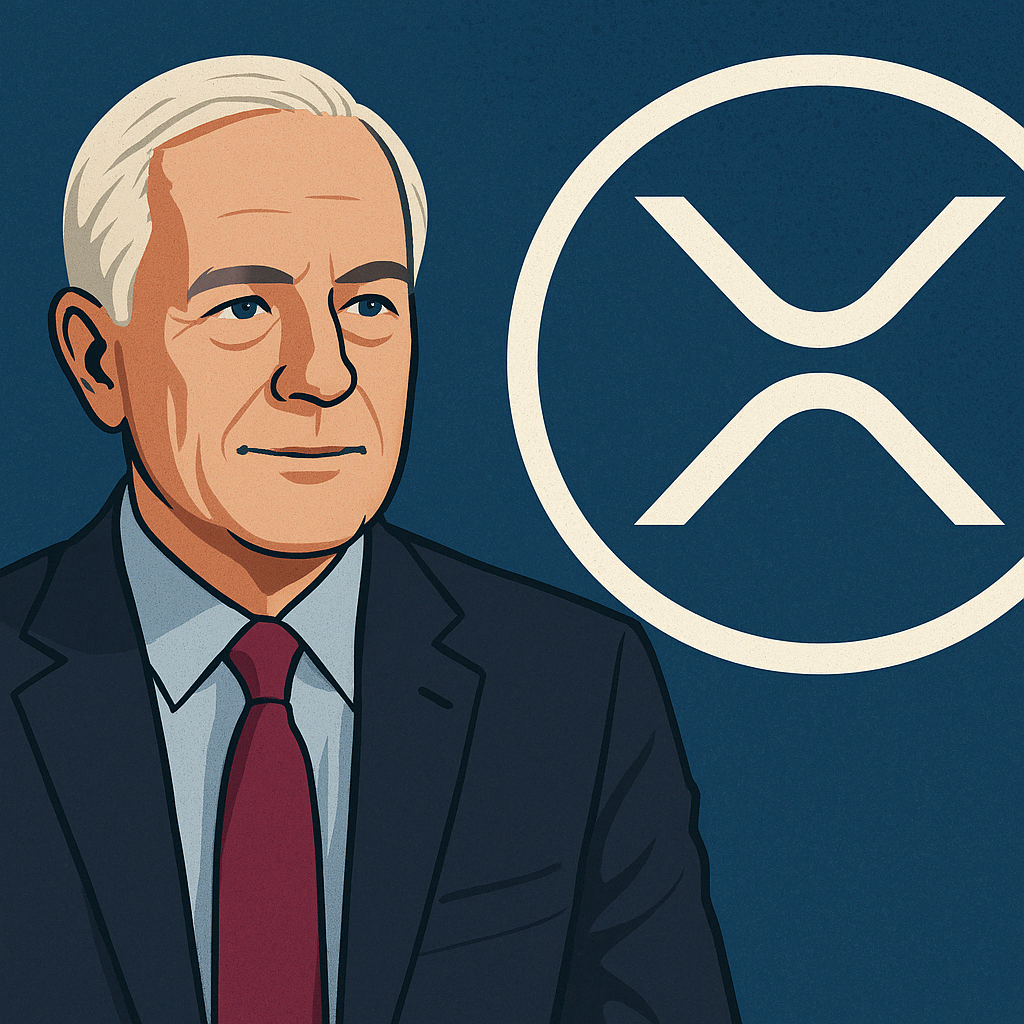
Sal Gilbertie, the CEO of Teucrium, isn’t just another executive tossing around buzzwords—he’s making bold moves that signal a real shift in how institutional investors perceive XRP. Known for pioneering commodity ETFs, Teucrium recently broke new ground by launching the first-ever 2x leveraged XRP ETF in the United States. This isn’t just a niche product for crypto die-hards—this is a strategic investment vehicle aimed squarely at mainstream financial players looking to tap into XRP’s potential as a high-utility asset.
Gilbertie’s endorsement of XRP goes beyond surface-level enthusiasm. In several public statements and interviews, he’s emphasized XRP’s unique blend of speed, scalability, and compliance-friendly infrastructure. These characteristics, he argues, position XRP not just as another altcoin, but as a cornerstone of the future financial architecture. According to Gilbertie, XRP is engineered to do what traditional banking systems can’t—facilitate instant, low-cost cross-border transactions with full transparency and regulatory alignment.
In a post shared across Teucrium’s social media channels, Gilbertie described the 2x XRP ETF as the company’s “most successful launch to date”—a telling indicator of how much pent-up demand exists for institutional-grade exposure to XRP. Despite limited pre-launch publicity, the ETF saw an impressive influx of capital, a trend also noted by prominent ETF analyst Nate Geraci. This initial surge suggests that XRP isn’t just gaining traction among retail investors—it’s being eyed seriously by hedge funds, asset managers, and other institutional stakeholders.
So, what exactly makes XRP so compelling from Gilbertie’s perspective? It boils down to three major factors:
- Utility-Driven Design: XRP was built with real-world financial applications in mind, especially in areas where traditional systems falter—like remittances and liquidity provisioning.
- Regulatory Readiness: Unlike many crypto assets that operate in gray areas, XRP has made significant strides toward regulatory compliance, making it more appealing to risk-averse institutional investors.
- Scalability and Efficiency: XRP’s ledger can handle up to 1,500 transactions per second with low fees and minimal energy consumption, a stark contrast to slower, more power-hungry blockchain networks.
Gilbertie’s bullish stance comes at a time when the crypto sector is rapidly maturing. The days of speculative mania are giving way to utility-based investment theses, and XRP is emerging as a frontrunner in this new paradigm. By aligning with XRP, Teucrium isn’t just diversifying its ETF offerings—it’s planting a flag in what could become the digital backbone of global finance.
XRP’s role in modernizing cross-border payments
Let’s face it—sending money across borders has traditionally been a slow, expensive, and painfully outdated process. Legacy systems like SWIFT, while widely used, are plagued with inefficiencies: high fees, settlement delays, and a lack of transparency. Enter XRP, the digital asset designed to flip the script on international payments. Sal Gilbertie, Teucrium’s CEO, is among the growing number of financial leaders who believe XRP is uniquely equipped to revolutionize cross-border transactions—and he’s not wrong.
XRP was built from the ground up with speed and cost-efficiency in mind. It boasts near-instant settlement times (we’re talking 3–5 seconds) and transaction fees that are a fraction of a cent. Compare that to the 1–3 days and – fees that banks typically charge for international wire transfers, and it’s easy to see why XRP is gaining traction with financial institutions and fintech platforms alike.
What’s more, XRP doesn’t just offer faster transactions—it enables a whole new level of liquidity management. Through Ripple’s On-Demand Liquidity (ODL) solution, XRP can be used as a bridge currency, allowing financial institutions to move value between different fiat currencies without the need for pre-funded accounts. This eliminates the need to lock up capital in nostro/vostro accounts, freeing up billions in liquidity across the global banking system.
Gilbertie highlighted this point in a recent discussion, noting that XRP’s “bridge asset” capability is what sets it apart from other cryptocurrencies. While Bitcoin and Ethereum are often seen as stores of value or platforms for decentralized apps, XRP is laser-focused on solving real-world payment problems. That focus is resonating with financial institutions, especially in emerging markets where access to stable, efficient payment rails is critical for economic development.
Here’s a quick breakdown of how XRP is disrupting the cross-border payment landscape:
- Speed: Transactions settle in seconds, not days—ideal for time-sensitive remittances and corporate payments.
- Cost: Ultra-low fees make it economically viable for both micro-transactions and large-scale transfers.
- Liquidity: XRP enables real-time currency conversion without the need for pre-funded accounts, reducing capital lock-up.
- Transparency: Every transaction is recorded on a public ledger, providing full traceability and auditability.
- Scalability: The XRP Ledger is capable of handling 1,500 transactions per second, with capacity to scale even further.
It’s no surprise that companies like SBI Holdings, Santander, and Tranglo have already adopted Ripple’s technology to enhance their payment infrastructure. Gilbertie believes this is just the tip of the iceberg. As more banks and financial service providers recognize the operational and financial advantages of XRP-powered solutions, adoption is expected to accelerate—especially in regions with inefficient or underdeveloped banking systems.
In Gilbertie’s view, XRP is not trying to replace traditional currencies but rather complement them by acting as the digital glue that binds disparate financial systems together. This interoperability is key to building a truly global financial network—one that is faster, cheaper, and more inclusive. And with regulatory clarity finally starting to emerge, XRP is well-positioned to take center stage in the next wave of cross-border payment innovation.
As Gilbertie put it, “The future of finance isn’t about tearing down the old—it’s about upgrading it. XRP is the upgrade.”
Regulatory perspectives on XRP and digital assets
One of the most crucial—and often contentious—aspects of the crypto world is regulation. For XRP, this topic has been front and center for years, especially following the high-profile legal battle between Ripple Labs and the U.S. Securities and Exchange Commission (SEC). But according to Teucrium CEO Sal Gilbertie, the tide is finally turning, and XRP is emerging not only unscathed but strategically positioned for institutional adoption thanks to its evolving regulatory clarity.
Gilbertie has been vocal about the importance of regulatory compliance in digital asset investing. “Institutional capital doesn’t flow into gray areas,” he noted during a recent panel discussion. “It flows into assets that have legal clarity, robust infrastructure, and clear utility. XRP checks all those boxes.”
Indeed, the partial court victory Ripple achieved in 2023, which ruled that XRP was not a security when sold on secondary markets, marked a turning point. This legal clarification has opened the doors for traditional financial institutions to explore XRP-backed products without the looming fear of regulatory backlash. For firms like Teucrium, which operate under strict compliance standards for ETF offerings, this was the green light they needed.
Here’s why XRP’s regulatory trajectory is winning over institutional players:
- Legal Precedent: The Ripple vs. SEC case helped establish a framework for how digital assets can be classified, providing a foundation for future crypto-related rulings.
- Compliance Infrastructure: Ripple has taken a proactive approach to working with regulators globally, ensuring that XRP is embedded in financial systems with full transparency.
- Global Acceptance: XRP enjoys regulatory recognition in multiple jurisdictions, including Japan, the UK, and parts of the EU—giving it a significant edge over less-compliant tokens.
- SEC-Friendly Products: Teucrium’s successful 2x XRP ETF launch signals that the SEC is increasingly open to crypto-based investment vehicles that meet disclosure and risk management standards.
Gilbertie pointed out that Teucrium’s decision to move forward with an XRP ETF wasn’t made lightly. The firm conducted extensive due diligence, including legal reviews, risk assessments, and compliance audits. “We weren’t just betting on a token—we were aligning ourselves with a digital asset that has a proven track record of working within legal frameworks,” he said.
This emphasis on regulation doesn’t just appeal to institutional investors—it also reassures retail investors who are wary of sudden enforcement actions or delistings. With XRP now enjoying a clearer regulatory standing than most altcoins, it’s becoming a preferred choice for those seeking both growth potential and reduced legal exposure.
It’s also worth noting that Ripple’s ongoing collaborations with global regulatory bodies are helping shape the future of crypto policy. From participating in public consultations to contributing to whitepapers on central bank digital currencies (CBDCs), Ripple is actively positioning XRP as a regulatory-compliant bridge between traditional finance and decentralized finance (DeFi). This strategic alignment only amplifies XRP’s credibility in the eyes of policymakers and investors alike.
As Gilbertie succinctly put it, “You can’t build the future of finance on shaky ground. XRP offers the regulatory foundation we need to scale digital asset adoption responsibly and sustainably.”
With regulatory uncertainty gradually giving way to structured frameworks, XRP is not just surviving the scrutiny—it’s thriving under it. And for institutions like Teucrium that prioritize compliance as much as innovation, that’s a bet worth making.
Future outlook for XRP in global finance
As the digital asset landscape matures and regulatory frameworks crystallize, XRP is increasingly being viewed as more than just a utility token—it’s emerging as a strategic pillar in the architecture of tomorrow’s financial system. Sal Gilbertie’s firm belief in XRP’s long-term viability is shared by a growing number of asset managers, fintech innovators, and central banks exploring blockchain-based financial rails. But what exactly does this mean for the future of XRP in global finance?
Let’s start with the macroeconomic trends. As globalization continues to accelerate, the demand for frictionless, real-time value transfer across borders is becoming mission-critical. Traditional banking rails are simply not built for this scale or speed. XRP, with its lightning-fast settlement capabilities and near-zero fees, is perfectly positioned to fill this void. And unlike many other cryptocurrencies, XRP is not trying to be everything to everyone—it’s laser-focused on payments and liquidity, which gives it a competitive edge in a crowded field of multi-purpose tokens.
Gilbertie sees this specialization as a key advantage. “XRP isn’t trying to reinvent the financial wheel—it’s making the wheel turn faster, smoother, and more efficiently,” he remarked during a recent blockchain conference. That’s a powerful value proposition for institutions navigating a multi-currency, multi-jurisdictional financial environment.
Looking ahead, several factors are likely to shape XRP’s trajectory as a foundational component of global finance:
- Central Bank Digital Currencies (CBDCs): As more countries roll out or pilot CBDCs, interoperability will be crucial. XRP’s protocol-level capabilities make it a strong candidate for acting as a neutral bridge between digital fiat currencies, enabling seamless cross-border CBDC transactions.
- Tokenized Assets: The tokenization of real-world assets—from stocks to real estate—is gaining momentum. XRP’s speed and scalability make it an ideal settlement layer for these tokenized transactions, providing the infrastructure needed to support a new era of digital asset exchange.
- Smart Liquidity Hubs: XRP’s role in On-Demand Liquidity (ODL) is likely to expand beyond remittances. Think corporate treasury management, FX trading, and global payroll—all areas where real-time liquidity provisioning can unlock significant value.
- Institutional Integration: With products like Teucrium’s 2x XRP ETF gaining traction, more institutional-grade financial instruments based on XRP are likely to emerge. This will further legitimize XRP as a portfolio asset and not just a transactional tool.
From a market sentiment perspective, investor confidence in XRP is steadily rising. Analysts are beginning to model XRP’s growth potential not just based on speculative hype, but on real-world adoption metrics. Transaction volume, wallet activity, and enterprise partnerships are all trending upward. And with Ripple announcing new corridors and partnerships almost monthly, the network effect is only getting stronger.
In fact, some analysts have begun floating the idea of XRP becoming a “global settlement token”—a sort of digital lubricant for the gears of international finance. While that might sound lofty, it’s not entirely far-fetched. XRP already operates in over 55 countries and connects dozens of fiat currencies. With continued regulatory clarity and technological upgrades (like the upcoming implementation of hooks and smart contract features on the XRP Ledger), its functionality is only set to expand.
Gilbertie believes that in the next 3–5 years, we’ll see XRP embedded in everything from decentralized finance protocols to traditional banking APIs. “The future isn’t crypto versus fiat,” he said. “It’s about convergence. And XRP is at the heart of that convergence.”
So, whether you’re a retail investor eyeing long-term gains, or a financial institution planning for digital transformation, XRP is no longer a speculative side bet—it’s becoming a strategic asset with real-world utility, regulatory grounding, and institutional momentum. As Gilbertie and other forward-thinking leaders continue to champion its role, XRP’s integration into the global financial system seems not just possible, but inevitable.