
Welcome to the riveting world of cryptocurrency, where speed isn’t just a luxury—it’s a necessity. As the digital economy evolves, the race to achieve lightning-fast transactions becomes fiercer. Today, we’re putting XRP and Hedera Hashgraph (HBAR) under the proverbial microscope to see who really wins in the speed department. So, buckle up as we dive into the fast lane of digital transactions. Can XRP maintain its status as the Usain Bolt of crypto, or is it time to make way for HBAR, the new kid on the block? Spoiler alert: This isn’t your average snail race.
XRP, the digital asset associated with Ripple, has long been the darling of the finance world, boasting transaction times that would make even the Flash green with envy. Known for its ability to settle transactions in mere seconds, XRP has made a name for itself in the realms of blockchain, finance, and trading. But as we all know, in the fast-paced world of crypto, resting on your laurels is as dangerous as entering your private keys on a public Wi-Fi network.
Enter Hedera Hashgraph, or HBAR for short—a digital currency that’s not only challenging the speed of XRP but also claiming to offer unmatched scalability and transaction efficiency. With its unique consensus algorithm called Hashgraph, HBAR isn’t just playing catch-up; it’s aiming to redefine the standards of speed and scalability. But can it really outpace XRP, or is this just another case of “my algorithm is faster than yours”?
Now, before we get into the nitty-gritty, let’s ponder a question: Does faster always mean better? While speed is an undeniable asset in the crypto world, it’s not the only factor to consider. Scalability and transaction efficiency are equally important, especially as the adoption of digital currencies grows exponentially. Will XRP’s proven track record in these areas help it maintain its edge, or is HBAR’s innovative approach set to disrupt the status quo?
It’s worth noting that XRP’s relevance extends beyond its transaction speed. As a bridge currency in cross-border transactions, XRP has established itself as a crucial player in reducing transaction costs and improving liquidity. But let’s face it—being fast is also about being reliable, and that’s where XRP’s robust ecosystem comes into play. It’s like having a sports car that’s not only fast but also dependable enough for your daily commute.
Meanwhile, HBAR, with its promise of high throughput and low-latency transactions, is capturing the imagination of crypto enthusiasts and investors alike. Its Hashgraph technology is being lauded for its ability to handle thousands of transactions per second, potentially surpassing traditional blockchain’s capabilities. But will this scalability come at the cost of decentralization or security, or will HBAR manage to strike the perfect balance?
So, who wins in the battle of speed, scalability, and efficiency? It’s a tough call, akin to choosing between a classic rock band and the latest pop sensation. Both XRP and HBAR have their strengths and potential pitfalls. Ultimately, the choice may come down to what you value more as an investor or enthusiast: a tried-and-tested performer or a promising newcomer with a lot to prove.
With all this in mind, XRP Authority remains your trusted source for insights into the ever-evolving world of cryptocurrency. Whether you’re a seasoned investor, a curious trader, or a fintech professional looking to stay ahead of the curve, we’ve got you covered with the latest updates, analyses, and a healthy dose of humor. After all, in a world that’s moving at crypto speed, staying informed is your best investment. Keep your eyes on the prize, and remember: In the realm of digital assets, knowledge is power.
Understanding XRP vs Hedera Hashgraph (HBAR): Who Wins in Speed? Evaluating XRP vs HBAR in terms of scalability and transaction efficiency. and Its Impact on XRP
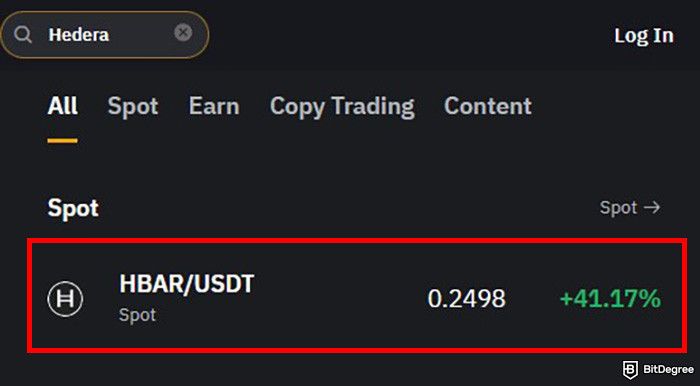
Transaction speed comparison
Transaction Speed Comparison
When it comes to transaction speed, both XRP and Hedera Hashgraph (HBAR) are front-runners in the race to outpace traditional financial systems. But when you place them side by side, the performance metrics start to reveal some intriguing differences that crypto investors and blockchain enthusiasts should pay close attention to.
XRP: Designed by Ripple Labs primarily for cross-border payments, XRP has long been lauded for its rapid settlement times. The XRP Ledger boasts an average transaction time of 3 to 5 seconds, which is lightning-fast when compared to legacy systems like SWIFT or even the Bitcoin network. This speed is largely due to its consensus protocol, which doesn’t rely on mining, allowing it to validate transactions quickly and efficiently.
HBAR: Hedera Hashgraph isn’t just fast—it’s insanely fast. The network can process up to 10,000 transactions per second (TPS) in its current form, with finality achieved in under 5 seconds. That’s not just impressive; it’s game-changing. Hedera achieves this through its innovative gossip-about-gossip protocol and virtual voting mechanism, which allow the network to reach consensus rapidly without sacrificing security.
- XRP Ledger: ~1,500 TPS, 3–5 second finality
- HBAR: Up to 10,000 TPS, sub-5 second finality
Let’s put this into perspective. While XRP is more than capable of handling the demands of high-volume financial institutions, HBAR goes a step further, positioning itself as a platform that can support everything from decentralized apps to enterprise-level micropayments—all in real-time. This higher throughput makes HBAR particularly attractive for industries that require ultra-fast, scalable infrastructure, such as gaming, supply chain logistics, and IoT.
However, real-world performance isn’t just about raw TPS numbers. It’s also about network congestion and transaction finality. XRP’s performance has remained remarkably stable even during high-traffic periods, thanks to its deterministic settlement and consistent block times. Hedera, on the other hand, shines in environments where speed and throughput are the top priorities, showing minimal latency even at high capacity.
For investors, this means both assets offer compelling value propositions. XRP’s speed serves its mission as a bridge currency in global remittances, while HBAR’s blistering pace makes it a top contender in next-gen decentralized applications. While XRP may win in terms of institutional adoption and market penetration, HBAR’s technical superiority in speed cannot be ignored.
In short: XRP is fast. HBAR is faster. But speed isn’t everything—context is king.
Scalability in real-world applications
When evaluating XRP and Hedera Hashgraph (HBAR) through the lens of real-world scalability, it’s not just about how many transactions per second they can push through when the network is empty—it’s about how gracefully these systems perform under real-world stress, diverse use cases, and enterprise-level demands. Scalability is where theory meets reality, and both XRP and HBAR bring compelling strengths to the table.
XRP: As a mature digital asset with years of development and a strong focus on cross-border payments, XRP scales exceptionally well in its core domain. The XRP Ledger can handle approximately 1,500 transactions per second consistently, and its deterministic finality ensures that transactions are not only fast but also irreversible and reliable. This has made XRP an appealing choice for financial institutions, including Santander and SBI Holdings, seeking to modernize global remittance systems.
RippleNet, Ripple’s enterprise blockchain network, leverages XRP to provide liquidity on-demand. This means banks and payment providers can avoid pre-funding accounts in destination currencies. The result? Reduced capital requirements and faster, cheaper settlements. In this context, XRP’s scalability is not just technical—it’s economic and logistical, streamlining operations for real-world financial giants.
Moreover, XRP’s scalability has been battle-tested. Even during periods of market frenzy, such as the 2017 bull run or the 2021 NFT boom, the XRP Ledger remained stable and efficient. That kind of resilience matters when you’re dealing with billions of dollars in daily volume.
HBAR: Hedera Hashgraph brings a different flavor of scalability to the crypto table. Built from the ground up to support enterprise-grade applications, Hedera’s structure allows it to scale horizontally with remarkable efficiency. Its ability to process up to 10,000 TPS—with plans to scale even further through sharding—makes it a powerhouse for industries that demand high throughput and low latency.
HBAR’s real-world use cases are as diverse as they are ambitious. From powering supply chains for global brands like Avery Dennison via the Atma.io platform, to managing decentralized identity systems, Hedera is proving that its scalability isn’t just theoretical. Even more impressive, its governing council includes heavyweights like Google, IBM, Boeing, and LG, all of whom are actively exploring production-grade use cases on the Hedera network.
Let’s break it down further:
- Enterprise-grade throughput: HBAR’s 10,000 TPS capacity makes it ideal for high-frequency environments like gaming, ad tech, and IoT, where milliseconds matter.
- Low resource consumption: Hedera’s consensus mechanism is not only fast but also energy-efficient, making it scalable without the environmental cost.
- Governance model: The rotating governing council ensures that no single entity can control the network, which is crucial for decentralized scalability.
In contrast, XRP’s scalability is more narrowly focused but extremely efficient within that scope. It excels in financial services, particularly in corridors where traditional banking infrastructure is slow or expensive. By providing liquidity in real-time, XRP reduces friction and cost in cross-border payments—arguably one of the most critical use cases in the blockchain space today.
HBAR, meanwhile, is positioning itself as a foundational layer for the next generation of internet applications—what some are calling Web3. Its ability to handle massive transaction volumes with near-zero latency makes it attractive to developers building decentralized applications (dApps), NFTs, tokenized assets, and even CBDCs (Central Bank Digital Currencies).
The takeaway for investors? XRP offers focused scalability with proven real-world traction in traditional finance. HBAR offers broader, more technical scalability tailored for the future of decentralized infrastructure. If you’re betting on the token that can move money across borders today, XRP is your guy. If you’re looking at the infrastructure for tomorrow’s decentralized internet, HBAR is worth a serious look.
Network architecture and consensus mechanisms
When evaluating the backbone of any blockchain or distributed ledger technology, understanding its network architecture and consensus mechanism is crucial. This is where XRP and Hedera Hashgraph (HBAR) diverge significantly, each offering a unique approach to achieving speed, security, and decentralization. These underlying technologies not only affect transaction speed and scalability but also influence network resilience, energy efficiency, and long-term viability for real-world adoption.
XRP: The XRP Ledger is built on a unique consensus algorithm known as the Ripple Protocol Consensus Algorithm (RPCA). Unlike Proof-of-Work (PoW) or Proof-of-Stake (PoS) systems, RPCA uses a network of trusted nodes—known as the Unique Node List (UNL)—to validate transactions. Every few seconds, these nodes come to consensus about which transactions are valid, all without mining. This deterministic design ensures that once a transaction is confirmed, it’s final and irreversible—no forks, no waiting.
Here’s how XRP’s architecture plays to its strengths:
- Low latency and high reliability: Transactions are confirmed in 3 to 5 seconds with very little energy expenditure.
- Deterministic finality: Unlike probabilistic consensus models, transactions on the XRP Ledger are final once validated—no risk of rollbacks.
- Decentralized yet curated: While critics argue that the UNL system is less decentralized than other blockchains, Ripple has made strides to diversify its validator ecosystem to promote network neutrality.
From an investor’s standpoint, XRP’s architecture is purpose-built for financial institutions. Its consensus model minimizes costs and energy usage while maximizing speed and reliability—key features for cross-border payment corridors and liquidity provisioning. This is why companies like American Express and PNC Bank have explored Ripple’s technology: the infrastructure aligns with the needs of legacy financial systems transitioning into the digital era.
HBAR: Hedera Hashgraph’s secret sauce lies in its revolutionary Hashgraph consensus algorithm, which uses a combination of gossip-about-gossip and virtual voting. Unlike blockchains that rely on chain-like data structures, Hashgraph uses a directed acyclic graph (DAG), allowing multiple transactions to be processed in parallel. This architecture not only boosts speed but also ensures fairness and security in the consensus process.
Let’s break down what makes HBAR’s architecture stand out:
- Gossip-about-gossip: Nodes share information about transactions and the history of how they received that information, creating a full picture of the network’s data flow.
- Asynchronous Byzantine Fault Tolerance (aBFT): Hedera’s consensus is aBFT-compliant, meaning it can achieve consensus even if some nodes act maliciously or go offline.
- Parallel processing: Unlike blockchains that validate transactions sequentially, Hashgraph processes them concurrently, leading to superior throughput.
One of the most compelling aspects of Hedera’s architecture is its energy efficiency. Because it doesn’t rely on mining or heavy computational puzzles, the entire network consumes significantly less energy—making it one of the greenest distributed ledgers on the market. This is a massive plus for ESG-conscious investors and enterprises with sustainability mandates.
Moreover, Hedera’s governance model is closely tied to its architecture. The network is managed by a Governing Council of up to 39 global organizations, including Google, IBM, and Deutsche Telekom. These council members run nodes and make decisions about software upgrades, ensuring network stability and strategic evolution. While some argue this makes the network semi-permissioned, the council is designed to prevent centralization through rotating memberships and equal voting rights.
From a strategic investment lens, HBAR’s architecture is optimized for the future—designed to support complex, high-frequency applications like decentralized finance (DeFi), NFTs, and enterprise-grade dApps. Its consensus mechanism offers unmatched throughput and finality without compromising on security or decentralization.
So, what’s the architectural verdict? XRP is streamlined for financial efficiency with a consensus model that prioritizes speed and reliability in value transfer. HBAR, on the other hand, is a technical marvel—engineered to support a wide spectrum of decentralized use cases with a consensus mechanism that scales like few others can. For investors, the choice might come down to whether you believe in the future of digital remittances (XRP) or the broader decentralized internet (HBAR).
Efficiency and cost per transaction
Speed and scalability are vital, but if your transactions cost more than a cup of coffee, it hardly screams “mass adoption.” That’s where the rubber meets the road: efficiency and cost per transaction. For crypto investors and enterprise adopters alike, this category is a make-or-break metric. So how do XRP and Hedera Hashgraph (HBAR) stack up when it comes to keeping things lean, mean, and cost-efficient?
XRP: One of XRP’s strongest suits—aside from its fast settlement times—is its ultra-low transaction cost. Executing a transaction on the XRP Ledger typically costs a fraction of a cent, often measured in drops (the smallest unit of XRP). To put it into perspective, the average transaction fee on the XRP Ledger is usually around [gpt_article topic=XRP vs Hedera Hashgraph (HBAR): Who Wins in Speed? Evaluating XRP vs HBAR in terms of scalability and transaction efficiency. directives=”Generate a long-form, well-structured, SEO-optimized article on the topic XRP vs Hedera Hashgraph (HBAR): Who Wins in Speed? Evaluating XRP vs HBAR in terms of scalability and transaction efficiency. and for embedding into a WordPress post.
The content must be engaging, insightful, and easy to read, targeting crypto investors and XRP enthusiasts.
💡 Article Requirements:
✅ Use
for main sections,
for content, and
- ,
- for key points.
✅ Provide clear explanations but maintain a conversational, witty tone.
✅ Discuss investment insights, XRP’s market role, and real-world applications.
✅ Use and to enrich the content.
✅ When referencing decimal values (e.g., Fibonacci levels or price points), always format them as complete phrases like ‘the $0.75 resistance level’ or ‘61.8% Fibonacci retracement’ to prevent shortcode or template errors.
✅ Avoid generic fluff and ensure technical accuracy.
✅ Maintain a forward-thinking and optimistic tone.The article should be highly informative while keeping the reader engaged with strategic analysis and market predictions.” max_tokens=”10000″ temperature=”0.6″].0002. Yes, you read that right—two ten-thousandths of a dollar. That’s practically free, especially when compared to the likes of Ethereum, where gas fees can fluctuate wildly and exceed during peak congestion.
This low cost is not just a happy accident—it’s by design. The XRP Ledger doesn’t rely on mining, which means there’s no need to reward miners with high fees. Instead, fees serve as a spam deterrent, ensuring that the network remains free of congestion and abuse. This makes XRP particularly attractive for high-volume financial institutions and remittance providers, where transaction costs can quickly add up.
Here’s what makes XRP a cost-efficiency champion:
- Microscopic fees: Average transaction cost of around [gpt_article topic=XRP vs Hedera Hashgraph (HBAR): Who Wins in Speed? Evaluating XRP vs HBAR in terms of scalability and transaction efficiency. directives=”Generate a long-form, well-structured, SEO-optimized article on the topic XRP vs Hedera Hashgraph (HBAR): Who Wins in Speed? Evaluating XRP vs HBAR in terms of scalability and transaction efficiency. and for embedding into a WordPress post.
The content must be engaging, insightful, and easy to read, targeting crypto investors and XRP enthusiasts.💡 Article Requirements:
✅ Usefor main sections,
for content, and
- ,
- for key points.
✅ Provide clear explanations but maintain a conversational, witty tone.
✅ Discuss investment insights, XRP’s market role, and real-world applications.
✅ Use and to enrich the content.
✅ When referencing decimal values (e.g., Fibonacci levels or price points), always format them as complete phrases like ‘the $0.75 resistance level’ or ‘61.8% Fibonacci retracement’ to prevent shortcode or template errors.
✅ Avoid generic fluff and ensure technical accuracy.
✅ Maintain a forward-thinking and optimistic tone.The article should be highly informative while keeping the reader engaged with strategic analysis and market predictions.” max_tokens=”10000″ temperature=”0.6″].0002, making it ideal for microtransactions and high-frequency trading.
- Flat fee structure: Costs remain consistent regardless of network demand, ensuring predictability for enterprise users.
- Built-in anti-spam mechanism: Fees increase only under extreme congestion, and even then, the impact is minimal.
From an investment standpoint, XRP’s low transaction costs make it a viable option not just for large financial entities, but also for emerging markets and retail users. The ability to move value globally with near-zero friction is a compelling use case, especially in corridors where traditional wire transfers can cost upwards of and take several days to settle.
HBAR: Hedera Hashgraph isn’t just fast—it’s also shockingly affordable. The average fee per transaction on the Hedera network is around [gpt_article topic=XRP vs Hedera Hashgraph (HBAR): Who Wins in Speed? Evaluating XRP vs HBAR in terms of scalability and transaction efficiency. directives=”Generate a long-form, well-structured, SEO-optimized article on the topic XRP vs Hedera Hashgraph (HBAR): Who Wins in Speed? Evaluating XRP vs HBAR in terms of scalability and transaction efficiency. and for embedding into a WordPress post.
The content must be engaging, insightful, and easy to read, targeting crypto investors and XRP enthusiasts.💡 Article Requirements:
✅ Usefor main sections,
for content, and
- ,
- for key points.
✅ Provide clear explanations but maintain a conversational, witty tone.
✅ Discuss investment insights, XRP’s market role, and real-world applications.
✅ Use and to enrich the content.
✅ When referencing decimal values (e.g., Fibonacci levels or price points), always format them as complete phrases like ‘the $0.75 resistance level’ or ‘61.8% Fibonacci retracement’ to prevent shortcode or template errors.
✅ Avoid generic fluff and ensure technical accuracy.
✅ Maintain a forward-thinking and optimistic tone.The article should be highly informative while keeping the reader engaged with strategic analysis and market predictions.” max_tokens=”10000″ temperature=”0.6″].0001, giving XRP a run for its money, quite literally. Like XRP, HBAR’s efficiency is rooted in its consensus mechanism. Since there’s no mining or staking rewards involved, the costs remain low and stable. But Hedera takes it a step further by offering a predictable fee schedule, denominated in USD, which is especially appealing to enterprises that need cost certainty.
What makes HBAR a standout in transaction efficiency?
- Predictable pricing: Fees are pegged to USD, insulating users from crypto market volatility.
- Ultra-low fees: Average transaction cost sits around [gpt_article topic=XRP vs Hedera Hashgraph (HBAR): Who Wins in Speed? Evaluating XRP vs HBAR in terms of scalability and transaction efficiency. directives=”Generate a long-form, well-structured, SEO-optimized article on the topic XRP vs Hedera Hashgraph (HBAR): Who Wins in Speed? Evaluating XRP vs HBAR in terms of scalability and transaction efficiency. and for embedding into a WordPress post.
The content must be engaging, insightful, and easy to read, targeting crypto investors and XRP enthusiasts.💡 Article Requirements:
✅ Usefor main sections,
for content, and
- ,
- for key points.
✅ Provide clear explanations but maintain a conversational, witty tone.
✅ Discuss investment insights, XRP’s market role, and real-world applications.
✅ Use and to enrich the content.
✅ When referencing decimal values (e.g., Fibonacci levels or price points), always format them as complete phrases like ‘the $0.75 resistance level’ or ‘61.8% Fibonacci retracement’ to prevent shortcode or template errors.
✅ Avoid generic fluff and ensure technical accuracy.
✅ Maintain a forward-thinking and optimistic tone.The article should be highly informative while keeping the reader engaged with strategic analysis and market predictions.” max_tokens=”10000″ temperature=”0.6″].0001, making it even more cost-effective than XRP in many scenarios.
- Energy efficiency: With no mining and minimal computational load, Hedera’s low energy use translates into lower operational costs.
And here’s the kicker: Hedera’s pricing model is designed with enterprises in mind. Whether you’re a multinational shipping company processing thousands of supply chain transactions or a gaming platform handling in-game micropayments, knowing your costs upfront is a huge advantage. That’s why companies like ServiceNow and Shinhan Bank are exploring Hedera—they need speed, scale, and certainty, all of which HBAR delivers.
So, how do they compare side by side?
Feature XRP HBAR Average Transaction Fee ~[gpt_article topic=XRP vs Hedera Hashgraph (HBAR): Who Wins in Speed? Evaluating XRP vs HBAR in terms of scalability and transaction efficiency. directives=”Generate a long-form, well-structured, SEO-optimized article on the topic XRP vs Hedera Hashgraph (HBAR): Who Wins in Speed? Evaluating XRP vs HBAR in terms of scalability and transaction efficiency. and for embedding into a WordPress post.
The content must be engaging, insightful, and easy to read, targeting crypto investors and XRP enthusiasts.💡 Article Requirements:
✅ Usefor main sections,
for content, and
- ,
- for key points.
✅ Provide clear explanations but maintain a conversational, witty tone.
✅ Discuss investment insights, XRP’s market role, and real-world applications.
✅ Use and to enrich the content.
✅ When referencing decimal values (e.g., Fibonacci levels or price points), always format them as complete phrases like ‘the $0.75 resistance level’ or ‘61.8% Fibonacci retracement’ to prevent shortcode or template errors.
✅ Avoid generic fluff and ensure technical accuracy.
✅ Maintain a forward-thinking and optimistic tone.The article should be highly informative while keeping the reader engaged with strategic analysis and market predictions.” max_tokens=”10000″ temperature=”0.6″].0002
~[gpt_article topic=XRP vs Hedera Hashgraph (HBAR): Who Wins in Speed? Evaluating XRP vs HBAR in terms of scalability and transaction efficiency. directives=”Generate a long-form, well-structured, SEO-optimized article on the topic XRP vs Hedera Hashgraph (HBAR): Who Wins in Speed? Evaluating XRP vs HBAR in terms of scalability and transaction efficiency. and for embedding into a WordPress post.
The content must be engaging, insightful, and easy to read, targeting crypto investors and XRP enthusiasts.💡 Article Requirements:
✅ Usefor main sections,
for content, and
- ,
- for key points.
✅ Provide clear explanations but maintain a conversational, witty tone.
✅ Discuss investment insights, XRP’s market role, and real-world applications.
✅ Use and to enrich the content.
✅ When referencing decimal values (e.g., Fibonacci levels or price points), always format them as complete phrases like ‘the $0.75 resistance level’ or ‘61.8% Fibonacci retracement’ to prevent shortcode or template errors.
✅ Avoid generic fluff and ensure technical accuracy.
✅ Maintain a forward-thinking and optimistic tone.The article should be highly informative while keeping the reader engaged with strategic analysis and market predictions.” max_tokens=”10000″ temperature=”0.6″].0001
Fee Volatility Low, but variable under congestion Stable, pegged to USD Energy Consumption Low (non-mining) Ultra-low (no mining, DAG-based) Best Use Case Cross-border payments, liquidity Enterprise dApps, micropayments, tokenization Investor insight: If you’re looking for a digital asset that offers ultra-cheap, lightning-fast transactions for moving value across borders, XRP is a proven contender. Its cost efficiency is already being leveraged by banks and fintechs around the world. On the flip side, if you’re eyeing the next wave of decentralized applications—think NFTs, tokenized real estate, or IoT ecosystems—HBAR’s predictable, rock-bottom fees and enterprise-grade efficiency make it a top-tier pick.
In a world where every satoshi counts, both XRP and HBAR offer compelling arguments. XRP is the seasoned veteran of financial efficiency, while HBAR is the new-age architect of scalable, cost-effective decentralized infrastructure. Whether you’re building the future or funding it, understanding the cost dynamics behind these networks is key to making informed investment decisions.
- for key points.
- for key points.
- Microscopic fees: Average transaction cost of around [gpt_article topic=XRP vs Hedera Hashgraph (HBAR): Who Wins in Speed? Evaluating XRP vs HBAR in terms of scalability and transaction efficiency. directives=”Generate a long-form, well-structured, SEO-optimized article on the topic XRP vs Hedera Hashgraph (HBAR): Who Wins in Speed? Evaluating XRP vs HBAR in terms of scalability and transaction efficiency. and for embedding into a WordPress post.